Cover Letter Guide 2026: How to Write One That Works

A cover letter is one of the few places in a job application where you get to control the story instead of letting a parsing system guess at it. Most resumes now get scanned for keywords before a person ever reads them. The cover letter is where you connect those keywords to a reason, explain a gap or a pivot, and show a hiring manager you understand what the role actually needs. Skip it or phone it in, and you're leaving that explanation to chance.
What a Cover Letter Is and Why It Still Matters
A cover letter is a short, targeted narrative that sits between your resume and the job description. Its job isn't to repeat your work history. It's to answer a question the resume can't: why this role, why you, and why now.
Some recruiters skim cover letters. Others read them closely, especially for roles where communication, judgment, or a change in direction matters. Think career switches, senior positions, or smaller companies where a founder reads every application personally. Even when a cover letter isn't the deciding factor, a weak or generic one can quietly work against you by signaling that you didn't take the application seriously.
Resumes today are increasingly written for applicant tracking systems, which means they read a little flatter and more keyword-driven than they used to. The cover letter is where the human tone comes back in. It's the place to show judgment, context, and specificity that a keyword-matched resume can't carry on its own.
Cover Letter Format: Structure, Length, and Key Sections
Keep it to three or four short paragraphs, no more than one page. Recruiters and hiring managers are reading fast, and a long letter reads as a lack of editing, not a lack of enthusiasm.
A structure that works consistently:
- Opening line: A specific hook tied to the role or company, not a generic greeting.
- Why you fit: One or two paragraphs connecting your real experience to what the job actually requires.
- Why this role, why now: A short paragraph on motivation, especially useful if you're changing industries or explaining a gap.
- Close: A direct, confident sign-off with a clear next step.
Skip the "To Whom It May Concern" salutation if you can find a name. Skip restating your resume line by line. And skip generic closing lines like "I look forward to hearing from you" without anything else backing it up.
How to Open a Cover Letter Without Sounding Generic
Most cover letters lose the reader in the first sentence because they open with something the hiring manager has read a hundred times: "I am writing to apply for the position of..." That sentence tells them nothing about you.
A better opening does one of these things:
- Names a specific problem or priority from the job posting and connects it to something you've actually done.
- References a detail about the company's product, mission, or recent direction that shows you did real research.
- States a concrete result from your background that's directly relevant to the role.
For example, instead of "I am excited to apply for the Marketing Manager role at your company," try something like: "When I saw your team is rebuilding lifecycle email from scratch, it reminded me of a project I led that took stagnant open rates and got them climbing steadily over several months." That sentence does more work in one line than a generic opener does in three paragraphs.
Matching Your Cover Letter to the Job Description
This is where most cover letters fail quietly. People write one version and send it everywhere, hoping it's vague enough to fit any role. Recruiters can tell within a sentence or two.
The fix isn't to rewrite the letter from scratch every time. It's to identify the two or three requirements in the job description that matter most, and make sure your letter directly addresses them with real evidence, not just enthusiasm. If the posting emphasizes cross-functional collaboration, don't just say you're a team player. Name the teams you worked with and what came out of it. If it emphasizes a specific tool or methodology, mention where you've used it and what changed as a result.
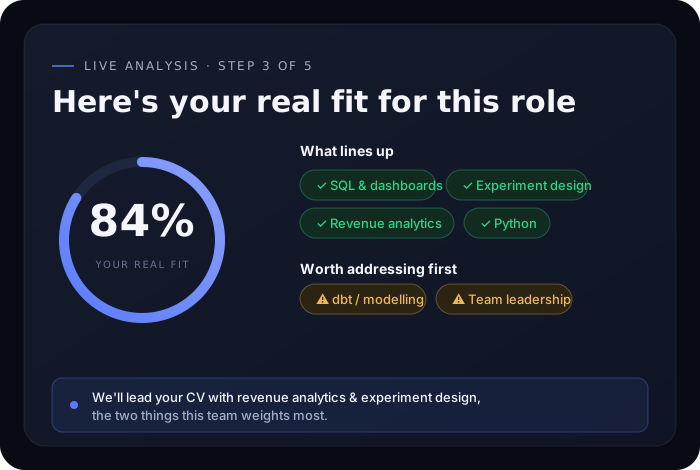
This only works if you're honest with yourself about fit before you write. Applying to a role that's a stretch in the wrong direction wastes an evening of writing and rarely leads anywhere. Before you draft a letter, it's worth checking how closely your actual background lines up with what the posting is asking for. LairIQ's Job Match Score gives you that read in advance, so you're not guessing whether a role is worth the tailored effort or spending your best writing on a job that was never a strong match.
Cover Letter vs Resume: What Each Should Say (and Not Repeat)
A resume and a cover letter should never say the same thing in different words. If they do, the letter is dead weight.
| Document | What it should carry |
|---|---|
| Resume | Facts, scope, results, keywords matched to the role, formatted for both ATS parsing and quick human scanning |
| Cover Letter | Context, motivation, judgment, the story behind a transition or gap, and direct connection to this specific job |
Your resume should already be doing the heavy lifting on keywords and measurable results. If it isn't, no cover letter can compensate. It's worth confirming your resume is actually built to pass the systems that screen it first: our guide on how to build a resume that passes ATS checks walks through exactly what those systems look for and how to structure a resume around it.
Once the resume is solid, the cover letter's job is to add what the resume can't hold: why you left a role, why you're changing direction, why a gap happened, or why this specific company matters to you. Repeating your job titles and bullet points in prose form wastes the one asset a cover letter has, which is context.
Keeping that record consistent matters more as you apply to more roles. LairIQ's Career Memory holds your real experience, achievements, and metrics in one place, so every cover letter and resume you generate pulls from the same accurate source instead of you reconstructing your history from memory each time.
Common Cover Letter Mistakes That Get Applications Ignored
- Restating the resume in sentence form. If a hiring manager can predict every line, they'll stop reading.
- Overusing "I" as the first word of every sentence. It reads as self-focused rather than role-focused.
- Generic enthusiasm with no evidence. "I'm a great fit" means nothing without a reason attached.
- Ignoring the actual job posting. Sending the same letter to five companies with only the company name swapped is easy to spot.
- Apologizing for a gap or pivot instead of explaining it. A calm, factual explanation reads far better than a defensive one.
- Formatting that doesn't match the resume. Mismatched fonts, tone, or file naming make the application look assembled in a hurry.
A cover letter's only real job is to explain what the resume can't, not to repeat what it already says.